GoodStocks Research
Too many companies profit by pushing pollution onto the rest of us and squeezing their workers. And Wall Street may even sell them to you as green.
GoodStocks Research does things differently. We aim for competitive returns, yes. But only when they are tied to positive real-world impact.
GoodStocks Research is fully independent. We don't earn when you trade, we don't take fees from companies we cover.
We're just analysts who give a damn. We focus on the companies that make you money without making a mess.
40
Stocks covered
87
Average Ziggma Stock Score
73
PositiveAverage Impact Score
40
Research reports published
Latest report first. Scroll the table for more.
KEYS
Keysight Technologies
Electronic test equipment
83
83
Profound
December 22, 2025
First report
December 22, 2025
V
Visa
Payments
Downside is greater than upside
77
70
Positive
May 21, 2026
6-month refresh
November 17, 2026
Scores show the Ziggma Stock Score and Impact Score as of each stock's latest report. Impact data from ACA Ethos.
Why GoodStocks

I've spent 20 years in finance, and I've heard the same story more times than I can count: business must only care about shareholder value. The river downstream, or the workers at the far end of the supply chain. Look at the state of the planet, and at how many people feel left behind, and it's clear where that story leads. It doesn't lead to a better future.
The good news is that it isn't the only story. You can own a bank that's a certified B Corp. You can own a pharma company that gets its medicines to patients who couldn't otherwise afford them, an education company that's legally bound to serve its students, or the companies building the clean power grid.
GoodStocks Research covers exactly these companies, so you can earn competitive returns without leaving your values at the door. Why I built Ziggma
Banking
A B Corp bank
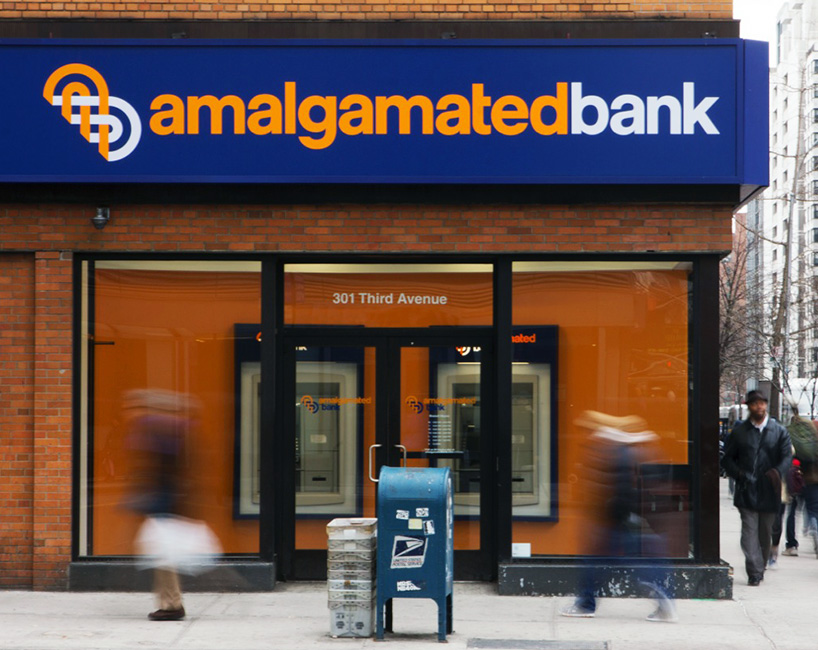
Amalgamated Financial (AMAL) has been a certified B Corp since 2017.

Health care
Medicines people can reach
Gilead (GILD) lets six generic makers produce its new HIV prevention drug royalty-free for 120 lower-income countries.

Education
A public benefit company
Laureate Education (LAUR) has been a public benefit corporation since 2015.

Clean tech
Clean power at scale
Geothermal from Ormat (ORA), solar panels from First Solar (FSLR).
How we pick
Every stock has to pass two tests. Is it a strong business at a fair price? And does it leave the world better off? We score both, and we show you the scores.
Test 1: the business
Rates every stock from 0 to 100 on Growth, Valuation, Profitability and Financial Health. A great company at a silly price scores lower, because what you pay matters.
Backtest, Jan 2022 to Jun 2026
15.7%
a year for stocks scoring 75–100
12.1%
a year for the S&P 500
$10,000 in the top-scoring stocks grew to $19,105, against $16,627 in the S&P 500.
Hypothetical backtest by Ziggma on its own point-in-time data, not an independent audit. About 2,400 US stocks, weighted by market value, rebalanced monthly, including dividends, before trading costs and taxes. Past performance doesn't guarantee future results.
Test 2: the world
Rates what a company does to people and the planet, across Climate Action, Resource Use, Fair Labor and Accountability. The data comes from ACA Ethos.
ESG asks
What could go wrong for the company?
Impact asks
What good does the company do for the world?
An oil major can earn a decent ESG rating by managing its risks well. Its Impact Score still counts the emissions.
Independence
Much of Wall Street's "sustainable" shelf is built to sell. Funds buy whole indexes, keep the polluters and add a green label. We pick stock by stock, and nobody pays us to pick theirs.
We use AI to help research and draft our reports. Every number is checked by a person before it's published. How we use AI · Why greenwashing is your biggest risk
Scores show the Ziggma Stock Score and Impact Score as of each stock's latest report. How we use AI
GoodStocks Research is independent research, not personal financial advice. Past returns don't predict future results.



Impact investing is an approach to investing that generates both financial returns and positive, measurable social or environmental impact. Impact investing goes beyond traditional methods that solely focus on financial gains and aims to make a positive difference on the world. This does not mean that impact investors forgo financial return compared to traditional investors. To the contrary, an increasing number of studies show that sustainable investing and impact investing can generate alpha.
The goal of impact investing is to generate a financial return at or above market returns. Empirical evidence shows that there is no trade-off between return and impact. In fact, many investors have been hugely success with impact investment such as in renewable energy (First Solar), circular economy (Uber, AirBnB) or education (Stride). The highly successful VC investor Chris Sacca predicts that the next trillion $ company will be focused on climate change.
Both approaches have the generation of financial return as their primary objective. ESG (Environmental, Social, and Governance) is about companies seeking to avoid harm from ESG factors that could hurt their financial returns (single materiality). That’s why the term ESG risk is used a lot in ESG investing. ESG investing is agnostic of companies’ impact on the planet and society, focusing solely on maximizing shareholder value. Impact investing also focuses on maximizing return, but requires at the same time that the capital invested (your money) will generate a tangible, positive effect on the planet and society. A company with a high impact score will score highly on both managing ESG risk for itself and on how it impacts the planet and society (double materiality). Here’s a short short example to illustrate the difference. Imagine company T has its main production site in a very arid location. One of Company T’s ESG risks therefore is water supply. Company T solves this problem by entering into a long-term water supply contract with a local water utility, leaving a nearby town low on water supply. Having managed this ESG risk well, Company T will get a high ESG score on this particular ESG risk – even though it procures the water at the expense of the nearby population. When looking at this case through an impact lens, the company will not get as high a score because it fails on the principle of double materiality. Although it manages its ESG risk well, the impact lens will fail the company on its outside impact as its water procurement contract strains the surrounding population’s water supply.
Yes, impact investing is gaining in popularity. According to a comprehensive survey by Morgan Stanley, more than three quarters (77%) of global private investors are interested in sustainable investing. 57% say their interest increased in the last two years and 54% anticipate increasing their sustainable investments in the next year. Drivers behind this growing interest include new climate science findings and the performance of sustainable investments.
Start free — create an account in under a minute.
To research, open the screener and apply impact filters.
To see your own portfolio's impact, link a brokerage, IRA, or 401(k), or upload your holdings, then open the Impact tab.
Most investors are surprised by what they find.

